Posts

McLAUGHLIN'S BAKERY, MAITLAND
Image
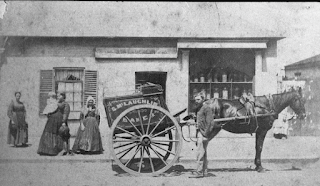
  McLaughlin's Bakery, Maitland Click here for zoomable image Reverse side of carte de visite Source: David Sciffer This carte-de-visite is of the first premises of McLaughlin’s Bakery in High Street, Maitland. (Handwritten note on reverse says “business near Town Hall, Maitland). William McLaughlin established a bakery in Maitland in 1864. He drowned on 21st March, 1870 while delivering bread by boat to South Maitland in one of a number of floods in that year. His wife Susannah took over the business and moved to the premises which were then being built at the corner of High and Victoria Streets (303 High Street) in March 1871. She ran the bakery successfully for a further 31 years. This dates the image to sometime between William’s death and the move to the new premises (1870-71) – her name is on the cart. When I was given access, in October of 2017, the carte-de-visite was owned by Harold Mayo, who was Managing Director of the bakery from 1964 until it closed. He thought i...

MARY McKILLOP'S COTTAGE

Image
  Holtermann Collection View from “The Towers” at Sydney Grammar School looking across to Alma Cottage fronting Alma Lane To the Wonderful Staff, I found the Holtermann photo of Mary Mackillop’s Cottage on the State Library web site. Photo and catalogue information attached below. The photo doesn’t appear to join the better-known panorama photos so may join another photo on the extreme left of the panorama. I’ve located the heritage reports Christo Aitken of our office produced if interested. The research using the Holtermann photo allowed the Sisters of St Joseph, after rereading Mary Mackillop’s letters, to confirm this was the cottage shape - one not with three verandas but three views of the harbour from verandah and windows. This research provided the architects with evidence to remove the multitude of additions to return the cottage to the form of Mary Mackillop’s time in North Sydney. Visitors to Mary Mackillop Place are now able to better appreciate aspects of her life a...

SUN TONG LEE

Image
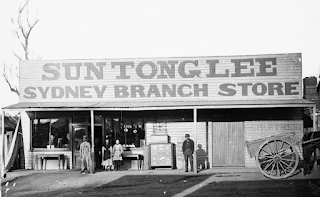
Sun Tong Lee Sydney Branch Store, Gulgong Click here for zoomable image Partly written by Barbara Hickson In 1851 the geologist named Stutchbury found gold in the neighbourhood of Gulgong. However it was the discovery of a rich gold seam called the “Canadian Lead” in August 1871 that led to a population explosion. By December of 1872 the population of Gulgong and district reached approximately 20,000. This brought with it commercial dealers of all kinds who set up shop initially in rough slab buildings, typically with sign-written pine board façades and parapets. The centre of town was the intersection of Herbert Street (which led down to the Black Lead gold mine) and Mayne Street. Here a multicultural society of Greeks, Italians, Americans, English, Irish, Bulgarians, Scottish, Australians and Chinese vied for services and stores. After the Lambing Flat race riots of 1860, Chinese were generally banned from mining, so they turned instead to the supporting activities of supplyi...